Mostrar mensagens com a etiqueta blog franca sozzani. Mostrar todas as mensagens

sábado, 8 de janeiro de 2011

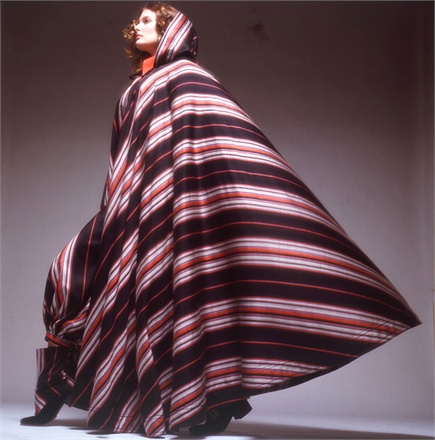
10 short stories about Fashion 3/10 Cape by Franca Sozzani

1938
Tony Kent 1968
Elisabetta Catalano 1970
David Bailey 1970
Barry Lategan 1971
Barry Lategan 1971
Gian Paolo Barbieri 1974
Francois Lamy 1978
David Bailey 1979
Barry Lategan 1979
Albert Watson 1990


Juergen Teller 1997

The cape has always exerted a mysterious andmagical appeal. Beginning with fairy tales in which the handsome prince arrives on a white horse, dressed in a flowing blue cape. Obviously.

All throughout fashion and costume history, capesand mantles of every sort have played a role in the clothing of every population. In the Victorian age,capes and wraps, sometimes embroidered or with paisley motifs for women, were alternated withblack, fur-lined capes for men.

From 1910, the cape began to come into its moment.Paul Poiret was definitely one of the first tailors responsible for the transformation of the cape, playing with its shape in various forms. In 1911 he created a velvet Batik with colorful designs and swirls in the muted tones typical of the era, and trimmed with fur at the collar and cuffs. It was Poiret who made the first ethnic-inspired cape, which he called Tanger, in 1919. In the early '20s, the American actress Estelle Winwood was depicted in a portrait wearing a chiffon gown and a matching cape by Harry Collins.

Jeanne Lanvin had a long tradition in capes. In 1926, she created one of the most beautiful models, shaped like an egg, in black velvet with white fur trim and embroidered with pink and silver beads. And in 1935, a multi-layered cape in organza strips that got increasingly wider and then trimmed with embroidery. And another in 1937, floor-length, with a geometrical beaded embroidery at the back. Just a look at the Gazette du Bon Ton of that era and you'll find various models, also in fur, always by Jeanne Lanvin.

Mainbocher remains famous for the white cape with silver fox trim in the portrait by Steichen. We're in 1932. And in the tradition of photography and fashion, another unforgettable piece is the short, quilted, red cape by Elsa Schiaparelli, photographed by the Baron de Meyer, and the group of models dressed in long satin capes, in ecclesiastical style, inspired by the paintings of Goya, in a photo taken in 1936, by Cecil Beaton. In 1934 Gilbert Adrian made a made-to-measure golden, hooded cape for Joan Crawford.

Elsa Schiaparelli often worked with the cape. From her Astrologie series in the '30s: the red satin cape with an embroidered sun on the back, and the new, transparent Glass Cape, made from Colcombet's Syntethic Rhodophane, a new synthetic material that was quite avant-garde in those years, has become an iconic piece in the history of fashion.

One of the most eccentric figures of that period was the Marquise Luisa Casati, who became famous for her capes and her extravagant, mysterious looks. She was dressed by the likes of Paul Poiret, Mariano Fortuny, and Erté - becoming the muse for many artists. Her long affair with Gabriele D'Annunzio rendered even more alluring and dark, as did her habit of walking with leashed panthers and other exotic animals.

As a theatrical item, a piece of clothing worthy of a grande soirée, the cape found its place in the collections of Madame Grès in 1947, most notably a long grey cape trimmed in fur, as well as a glimmering, blue silk creation byBalenciaga in 1948.

The drama of the cape began to slowly diminish in the 1950s, and it became more sophisticated, as demonstrated by the photos by Henry Clarke in 1955: a small,sealskin cape by Balmain, worn over a slim-fitting, belted dress.

Again, in that same era, the cape transformed into a romantic accessory: in1955 Jacques Fath created a white, three-layer, pleated cape worn over an evening gown. In these years, the cape became replaced by stoles, large or small, almost always in fur.

Then in the '60s, the cape took on a more playful air, with a young, carefree image. In 1965, Emilio Pucci created big, colorful capes with his signature patterns and hoods. Lord&Taylor made a hooded model in gold brocade in 1966 and the next year, Yves Saint Laurent created a black velvet cape worn with a ruffled shirt and silver buckled shoes. Laurent, in 1970, looked towardsMorocco for inspiration and his hooded capes were elaborately adorned. It was again Yves Saint Laurent who designed the wool cape that Marguerite Yourcenarwore when she entered the Accademie Francaise in 1981.

In 1969 Emanuel Ungaro made a cape in sangallo with huge ping-pong sized balls as trimming, worn with shorts and a metal brassiere, which was rendered by Bert Stern in a stupendous photo. And in the '70s, Giampaolo Barbieri immortalizedMirella Petteni while wrapped in cape by Lancetti; in 1971 Jane Birkin, dressed in a cape and shorts by Luba was photographed by Lichfield.

In 1970, Pierre Cardin designed capes in jersey tweed of with jacquard designs that wrapped around the head, with an oval opening at the face. Biba createdfur capes and Walter Albini made them in black wool. The ethnic chic phasebegan in 1976 and Parkinson was the photographer of the moment. Iman was photographed numerous times by him while traveling in the East with gorgeouswhite capes.

At the beginning of the '80s, capes were still being featured, but only in collections by Japanese designers like Rei Kawakubo for Comme des Garçons orYohji Yamamoto. In the '90s, they appeared in very few collections: Giorgio Armani made a few evening capes in velvet and silk, and there were some in the Haute Couture collections by John Galliano and Jean Paul Gaultier.

They appeared sporadically in a few collections, like an adorned, embroidered cape from the last collection by Alexander McQueen, or those from a few young designers like Erdem.

Capes are alluring, and they leave the body more freedom of movement. They arefeminine and fascinating. And as it always happens in fashion, they'll have acomeback. Sooner or later.


Franca Sozzani


sexta-feira, 7 de janeiro de 2011

10 short stories about Fashion 2/10 Fringes by Franca Sozzani

Edward Steichen 1925
Edward Steichen 1926
Photo by Gianni Penati 1969
David Bailey 1969
Gian Paolo Barbieri 1969
David Bailey 1970
David Bailey 1971
Jean Jacques Bugat 1971
Albert Watson 1990
Albert Watson 1990
Patrick Demarchelier 1991
Walter Chin 1992


Steven Meisel 1999

During the 1920s, one of the most popular dances, the Charleston, lent its name to a dress completely covered in fringe, that would move and shake along with the body's movement, revealing the legs. These embroidered or shawled dress invaded all of high society throughout America and Europe.

These were the Fitzgerald years, and many of the period's actresses wore these kinds of dresses in either short or long versions. From Gertrude Lawrence and Olive Borden in 1925-27 to Joan Crawford in a white dress with fringes at the sleeves and around her whole body in 1932, toClaudette Colbert in a long cocktail dress in 1935.

The designers of the era were Worth, who in 1927made a dress entirely of fringes of silvery tinsel, and Vionnet who created dresses with large floral designs and long fringe in 1924.

In the '50s, Elvis Presley adopted fringe as his uniform with his famous leather jackets, creating an army of worldwide followers. In that same period (late '40s and early '50s) the Hell's Angels movement adopted the fringed look with jackets and gloves while riding their Harley Davidsons.

In 1952, Rita Hayworth, captured attention with a fringed dress entirely embroidered in sequins, and two years earlier the costume designer Gilbert Adrian had created a dress made exclusively from fringe for another star. This was the trend for elegant and sensual divas. The last designer to treat fringe with diva-esque allure was Valentino in the '60s, with a red poncho featuring long fringe worn over trousers.

Already in '60s, however, fringe began to take on Native American influence.Yves Saint Laurent was inspired by Africa and in 1967 created two Africandresses with straw fringe on mesh dresses with embroidery in wood and beads, and then revisited the fringe theme in the same year for a mink coat. Twiggy,Jane Shrimpton, Penelope Tree, Sonny Bono and Cher, all frequently wore jackets and dresses in suede with fringe with an American Indian feel. It became Cher's style, who for a period wore fringe for both day and evening wear.

In the '70s, fringe increasingly appeared in fashion magazines and were photographed by the likes of Lichfield, Bert Stern, David Bailey and Richard Avedon, as well as Helmut Newton, Irving Penn, and Barry Lattegan.

Then when the Hippy movement took off in the 1970s, suede and fringe were everywhere, especially in places like Biba on Carnaby Street, and became more and more decorated.
Bill Gibb invented gypsy dresses and patchwork with fringe, while Martine Gruber created the first fringed and hooded ponchos. Twiggy herself had Bill Gibb create embroidered suede trousers and jackets with fringe for her debut at the Royal Festival Hall Concert in 1976.

Still in the '70s, Jacques Cassia made his name with a two-piece outfit with a fringed vinyl skirt and a knotted aluminum brassiere. The trend contaminated into the music scene, with figures like Ringo Starr with his wife Maureen Coxand Tina Turner at a concert at New York City's Felt Forum, dressed in a mini-dress by lori Lazaar.

In 1980 Stephen Sprouse launched knitwear with fringe, Giorgio di Sant'Angelocreated wide, colorful chiffon dresses with fabric strips forming fringe, andClaude Montana worked a lot with leather embroidered with studs and fringe. In the same period, Ralph Lauren became known for skirts, trousers, jackets, long coats and suede dresses - all with fringe.

In 1987 Azzedine Alaia designed a beaded fringe dress for Tina Turner. She was photographed by Peter Lindbergh for Vogue Italia and Vogue America. Two years later
Christian Lacroix made an sculpture-dress, creating the jackets with embroidery and fringe like drapery cords and trousers made exclusively of corded fringe.

Giorgio Armani, at the end of the '80s, sent models down the runways with embroidered, patterned, long-fringed shawls, as well as fringed evening dresses. In 1990, Dolce & Gabbana created a long skirt and top embroidered with crystals forming short fringe. It was worn by Linda Evangelista and photographed by Steven Meisel.

From the mid-90s, Jean Paul Gaultier created entire collections with a fringe theme, both for dresses and leather coats. In the same period, John Gallianodedicated an entire collection to Squaws and then to China, always with the use of fringe - although with different origins.

In the Spring of 2007, fringe became ubiquitous, this time with a cowgirlconnotation. Prada proposed a short tunic made entirely of fringe, along with coats, clutches and bags. It became the trend of the season: in that same year,Roberto Cavalli sent down the runway a dress made with glass bead fringe. And after only three years, he then re-proposed an entirely fringed collection.

Impossible to extinguish, fringe will always come back. In one way or another.


Franca Sozzani

terça-feira, 28 de dezembro de 2010

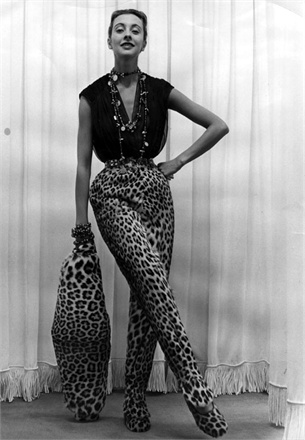
10 short stories about Fashion 1/10 Leopard by Franca Sozzani

Los Angeles 1925
Tunbridge 1941
Martin Dutkovitch 1951
Paolo Barbieri 1967
Hans Feurer 1978
Francois Lamy 1982
Michael Roberts 1991
Michel Comte 1996
Steven Meisel 1999

Leopard printed on fabric, leather, on pony skin, is definitely one of the most enduring trends over the recent years, one that gets reinterpreted and presented on the runways of many designers and in accessories collections.

A leopard, the real thing, was flaunted by the American actress Marian Nixon in 1925. She would take a real live leopard for walks on a leash. Some years later, circa 1930, in the Paris atelier belonging to Barone Christoff von Drecoll, directed by Meussieur Besancon de Wagner (the father of Maggie Rouff, one of fashion's great creators), a golden silk outfit was created, which closed at the ankles like odelisque trousers and were matched with a leopardskin jacket.

Jeanne Paquin, another great tailor from the '20sand '30s, used a lot of fur in her collections and when she created a leopard coat, she created quite a reaction. In the '40s the Callot Sistes made a day dress with a large leopard collar and fur inlay lining in the pockets.

But it was the 1947 spring-summer collection by Christian Dior that first usedleopard as a print and not fur, for a day dress called Jungle and an evening gown called Afrique. Dior also often used leopard fur for large cuffs on velvet evening coats, for hats or outerwear. Already in the 1950's, Roger Viveierproduced a leopard-like print on satin in shades of bright blue, with matching shoes and bags.

Gilbert Adrian, the MGM costume designer during the '40s-'50s, dressed the greatest actresses of the period and in 1951 created a dress in leopard-print lamé. In the same year, Balmain created a total look in fur: trousers, jacket and ankle boots.

Wearing leopard was synonymous with great sophistication and elegance. And it was like that during the '50s and '60s when film stars like Ursula Andress,Brigitte Bardot and Catherine Deneuve wore it. From cloak coats in the '50s, leopard then transformed into tiny double-breasted jackets or little coats in slim, fitted lines in the '60s, sometimes even in faux fourrure.

With the printed fabric, Dior opened up a path that continues to be followed even today. Yves Saint Laurent, who took over from Christian Dior to oversee the fashion house, continued to use to the print and included it in his YSL collection, which became famous for his long chiffons, jackets and unforgettable sequined coat from 1964. For the entire 1980s, Yves Saint Laurent continued both prèt à porter and Haute Couture. 

Once again in the '60s Bob Bugnand, (the American designer that was first the chief designer for Jacques Heim and Robert Piquet, before opening his own fashion house in New York, sent his clothes to be embroidered and printed in Paris. His clients included the Duchess of Windsor, Jacqueline Kennedy and Babe Paley), became famous for creations including a high-waisted dress and embroidered with sequins forming a leopard motif.

It was leopard once again that was responsible for the first successesof Roberto Cavalli in the 1970s, as well as Leonard, a designer whose career has spanned over 50 years, and who has always used exclusively printed silk. The brand is still in production today.

It was used in inlay patchwork by Christian Lacroix in the '80s. Mad for leopard print, he also had leopard printed carpeting everywhere. It became a definite trend in knitwear thanks to Azzedine Alaia in 1991, as proven by a famous group photo of supermodels that appeared in Vogue America.

And again, in the early '90s, it was used by Thierry Mugler. It became a signature feature for Dolce & Gabbana starting in 1994. Since their debut, all of their pieces are lined in leopard print. Their stores also have drapes, carpet and wall covering in the same print.

The idea of leopard has totally changed from its original concept. It's become a symbol of sensuality, of sexiness. Bustiers, thigh-high boots, tight pants and jersey T-shirts give another meaning to the print. Leopard makes every item more sensual, just by the print. And it's been used in chiffon, velvet, silk, and any kind of stretch material.

It's been used and abused over the years. Over numerous episodes it's resurfaced in '60s style, ladylike style, or colored in many variants by many designers, whether famous or not. It's been, and continues to be used for accessories like boots, shoes, sandals and bags in the collections of every fashion line of which we know the existence.

Inevitably it runs the risk of being interpreted badly, with cheap fabrics andvulgar shapes and is now often considered cheap o inelegant. In the collective mindset, leopard continues to be considered sexy and not chic.

I totally disagree, because still today, as I've already said in another post, everything depends on how it's worn and by whom. And on the fabric used and the shape it takes.

The strength of leopard lies in the surprise it creates when paired with classic pieces. It breaks the rules of conformism, adding an eccentric touch. But only if it happens with originality and creativity. If that's not the case, it's better to just forget about it entirely.